Modern farming runs on hydraulics. The tractor that pulls your plough, the harvester cutting through your wheat, the telescopic handler stacking fruit bins, the TLB clearing irrigation channels — every one of these machines uses hydraulic power to do its work. When those systems perform correctly, you get through the season. When they fail, you lose days you cannot recover.
Agricultural hydraulic systems face a particular set of demands. Farm equipment works long hours in dusty, hot conditions across terrain that puts constant stress on hoses, cylinders, and seals. Service intervals are stretched during busy seasons. And unlike an earthmoving contractor who can sometimes afford a machine down for a few days, a farmer working against a harvest window or a planting schedule cannot always wait.
DMA Hydraulics and Pneumatic Solutions is based in Paarden Eiland, Cape Town, and provides hydraulic repairs, servicing, and component supply for agricultural and farming equipment across the Western Cape. This post covers how hydraulic systems work on farm equipment, the failure patterns that affect machinery in this region, the maintenance practices that extend equipment life, and how to get fast support when a hydraulic fault sidelines a machine at the worst possible time.
How Hydraulics Power Agricultural Equipment
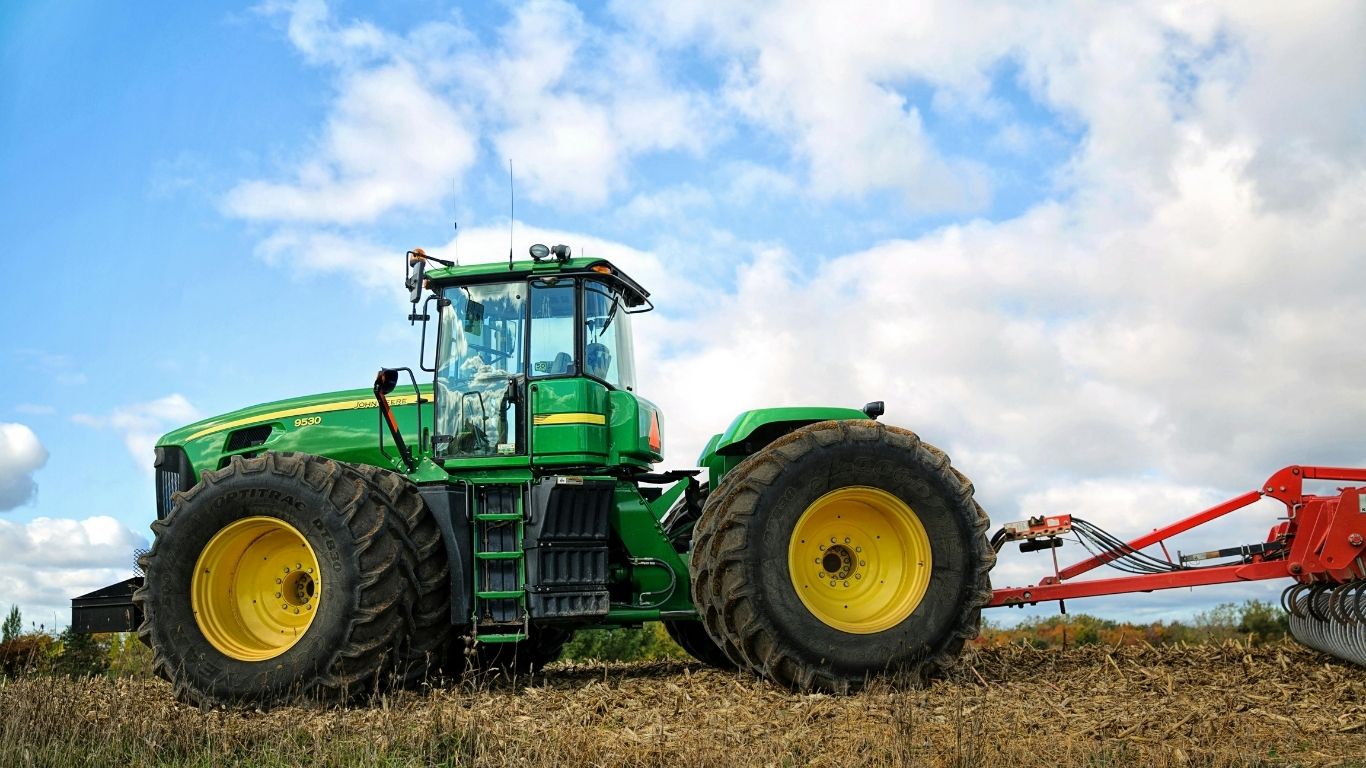
A tractor’s hydraulic system is one of the most used systems on the machine. It powers the three-point linkage that raises and lowers implements. It drives the steering. It operates front loader arms, bale handlers, and remote cylinder circuits for towed implements like disc harrows and planters. On larger tractors, the hydraulic system also powers hydraulic motors driving the PTO and other auxiliary functions.
The system centres on a hydraulic pump driven directly by the engine. That pump draws fluid from a reservoir and delivers pressurised flow to a series of control valves, the remotes and three-point linkage controls the operator uses from the cab. Those valves direct flow to cylinders or motors, which produce the lifting, pushing, or rotating force the implement needs.
Implements themselves rely on hydraulics. A disc harrow uses hydraulic cylinders to adjust working depth. A planter uses cylinders to raise the toolbar for transport and lower it for work. A sprayer boom folds and unfolds hydraulically. A self-loading trailer tips hydraulically. Every one of these functions pulls from the tractor’s hydraulic system, which means the tractor’s pump, fluid, filters, and hoses are carrying the load for the whole outfit.
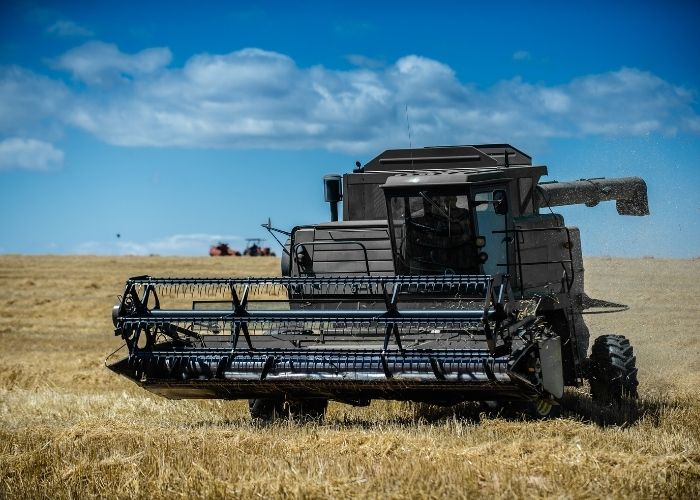
On combine harvesters and self-propelled sprayers, the hydraulic system is even more central. Ground drive, header lift and tilt, reel adjustment, unloading auger swing, and variable header height control are all hydraulic functions that run simultaneously during harvest. The hydraulic system on a combine harvester working at full capacity is under constant, heavy demand for hours at a time.
Telehandlers and front-end loaders on farms use hydraulic cylinders for boom lift, boom extension, and carriage tilt. These machines work in close proximity to infrastructure, people, and livestock, which means a hydraulic failure is not only a productivity problem but a safety concern.
Why Agricultural Hydraulics Fail
Farm equipment hydraulic failures follow consistent patterns. The same components fail across different machine types and different farming operations, driven by the same underlying causes.
Contaminated Hydraulic Fluid
Contamination is the dominant cause of hydraulic wear on farm equipment, and farming creates some of the worst contamination conditions of any industry. Dust from dry cultivated soil, chaff and plant material during harvest, and water from irrigation and rain all find routes into hydraulic systems. Reservoir breathers clog with chaff and dust. Filler caps are removed for fluid top-ups in the field and replaced without cleaning the area first. Cylinders on implements pick up abrasive particles on exposed rod surfaces that are then pulled back through the wiper seal into the cylinder body.
Contaminated fluid carries those particles through every precision component in the system. Pump wear accelerates. Valve spools score and start leaking internally. Cylinder bores develop scratches that allow fluid to bypass past the piston seal. The machine gradually loses hydraulic performance while continuing to operate, making the degradation easy to dismiss until it becomes a failure.
Regular fluid sampling is the most effective tool for catching contamination before it causes serious damage. A fluid sample taken at service intervals and sent for laboratory analysis gives you a particle count, water content reading, and an assessment of the fluid’s condition that tells you exactly what is happening inside the system.
Seal and Cylinder Failure
Hydraulic cylinders on farm equipment and implements are exposed to conditions that accelerate seal wear. Implement cylinders are often mounted in positions where they collect dirt, plant material, and moisture. Rod seals and wipers are the first line of defence against contamination entering the cylinder. When they degrade, the cylinder rod carries contamination into the barrel on every retraction stroke.
External cylinder leaks are easy to see. The fluid running down the cylinder barrel is visible during pre-start inspection. Internal bypass is harder to detect. A cylinder bypassing internally loses force and becomes slow to respond. An implement that was previously lively and responsive starts to feel sluggish. Lift capacity drops. Under heavy load, the cylinder may drift slowly under the weight it is carrying.
Seals on cylinders exposed to UV, heat, ozone, and agricultural chemicals degrade faster than those in protected environments. Cylinders on implements stored outside year-round are particularly vulnerable. Replacing seals proactively, rather than waiting for visible leaks, is a lower-cost approach than dealing with a scored cylinder barrel that requires a full rebuild or replacement. DMA Hydraulics carries out hydraulic cylinder reseals and rebuilds from our Cape Town workshop, with fast turnaround for Western Cape farming operations.
Hose and Fitting Failures
Agricultural equipment operates in environments where hoses are constantly exposed to abrasion, UV, agricultural chemicals, sharp crop residues, and physical impact. Implement hoses are routed through areas that collect debris and are regularly bent, kinked, and scraped during field operation and transport.
A hose failure in the field is a serious problem. Beyond the immediate loss of hydraulic function, a high-pressure injection injury from a failed hydraulic hose is a medical emergency. Agricultural workers and contractors need to understand that a pinhole leak in a high-pressure hydraulic hose is not something to check with a bare hand. The pressure can inject fluid under the skin without leaving an obvious wound.
Hose condition should be checked at every service. Any hose showing abrasion through the outer cover, cracking, bulging, or corrosion at end fittings should be replaced before it fails. Hoses on implements that have been in storage for several years should be inspected carefully before the implement goes back to work, as ozone and heat cycling cause degradation even without use. DMA Hydraulics manufactures hydraulic hoses to specification from our Cape Town facility and can supply replacement hoses for a wide range of agricultural equipment.
Pump Wear
The hydraulic pump on a tractor or self-propelled machine runs continuously whenever the engine runs. Over thousands of operating hours, internal wear increases clearances and reduces the pump’s ability to deliver full pressure and flow. The operator may notice this as slower implement response, reduced loader lift force, or the three-point linkage struggling to raise heavy implements.
Pump wear is accelerated by contaminated fluid and by operating with low fluid levels. A pump cavitating because the reservoir level has dropped generates heat and damages internal surfaces faster than normal wear. Regular fluid level checks and maintaining correct fluid levels are the simplest preventative measures available to any farm operator. When a pump does need attention, DMA Hydraulics carries out pump diagnostics, rebuilds, and replacement from our Paarden Eiland workshop in Cape Town.
The Western Cape Farming Environment and What It Does to Hydraulics
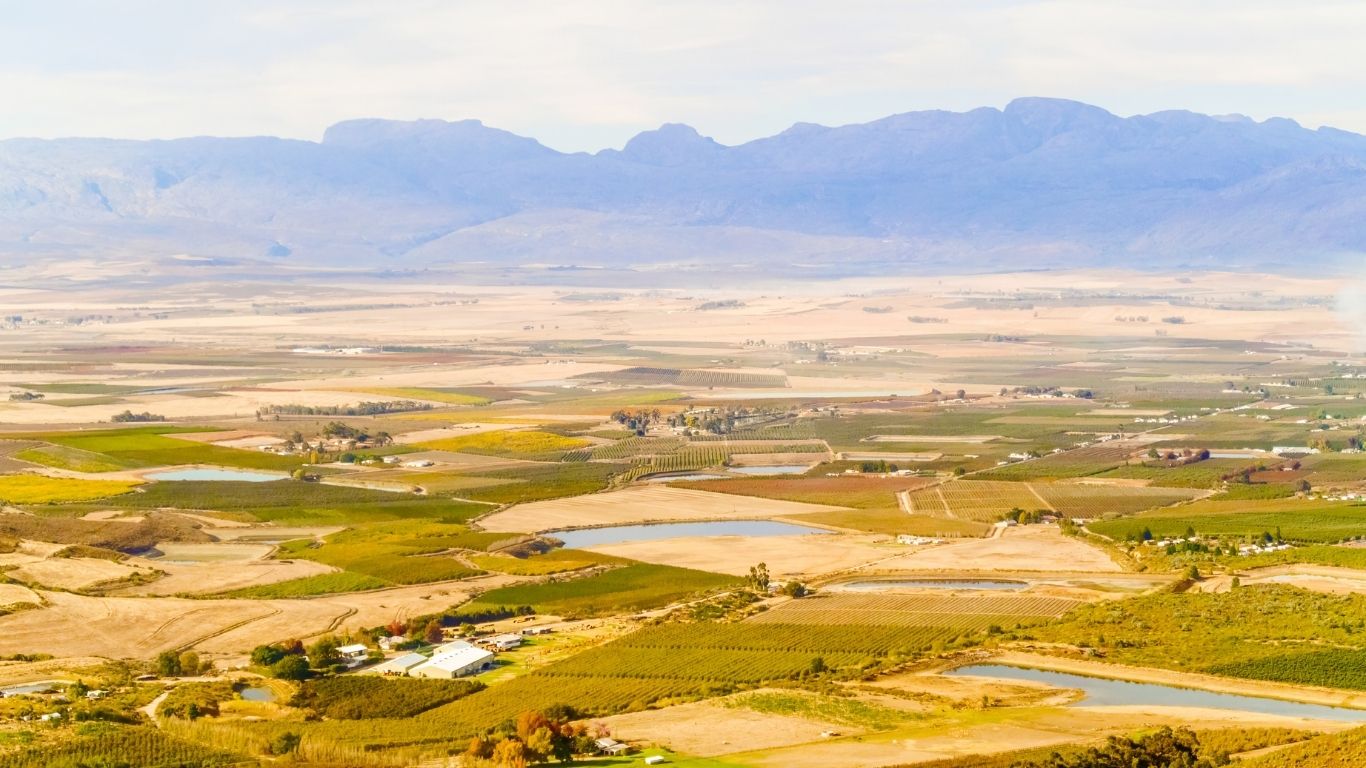
The Western Cape is one of South Africa’s most productive farming regions. Wine and table grape production in the Stellenbosch, Paarl, Franschhoek, and Hex River Valley areas, deciduous fruit in the Elgin and Ceres districts, grain in the Swartland, and mixed farming across the Overberg all depend on equipment that works in demanding seasonal conditions. DMA Hydraulics services farming operations across all of these areas from our Cape Town base.
The dry summer months create serious dust problems for hydraulic systems. Harvesting operations on grain farms and fruit orchards generate substantial quantities of dust and fine organic debris. Equipment working through harvest is exposed to this environment continuously, and filter change intervals that are adequate for normal conditions may not be sufficient during a dry harvest period.
Cape Town’s prevailing south-easterly wind carries dust and fine soil particles across open farming areas and into equipment that is parked or working. Reservoir breathers on tractors and implements need to be clean and functional to prevent contamination through that route. Farms in the Swartland and areas north and east of Cape Town are particularly affected during the dry season.
Winter rainfall across the Western Cape introduces moisture into hydraulic systems through condensation in reservoirs, degraded seals on implements stored in the field, and water ingress through filler caps and breathers. Water in hydraulic fluid causes corrosion, degrades fluid quality, and promotes microbial growth. Equipment that stands unused through winter with hydraulic cylinders in the retracted position is particularly prone to seal degradation from moisture and ozone exposure.
The seasonal nature of Western Cape farming creates another maintenance challenge. Equipment used intensively during planting and harvest seasons and then parked for months receives irregular maintenance attention. Problems that develop during the busy season are often deferred and then cause a failure at the start of the next season when the machine is needed immediately.
Maintenance That Keeps Farm Equipment Working Through the Season
The most effective maintenance for agricultural hydraulic systems is planned rather than reactive. A machine that goes into each season with fresh fluid, clean filters, and inspected hoses and cylinders will complete the season with fewer interruptions than one that has been running on overdue fluid and borderline components.
Fluid and Filter Changes
Follow the manufacturer’s service interval for hydraulic fluid changes, and consider shortening that interval for equipment working in heavy dust or high heat. Tractor hydraulic fluid often serves dual duty, lubricating the transmission and wet brakes as well as powering the hydraulic system. Using the correct fluid grade is not optional, and mixing fluid grades causes compatibility problems that can damage seals and internal components.
Replace hydraulic filters at the manufacturer’s interval and inspect the filter element when you remove it. Metal particles in the filter element indicate internal component wear. An unusual quantity of debris in a filter that was changed recently is a warning that something is generating abnormal wear in the system.
Pre-Season and Post-Season Inspection
Before each busy season begins, carry out a full inspection of all hydraulic cylinders, hoses, and fittings on the tractor and implements that will be used. Check cylinder rods for scoring and seal condition. Check hoses for cracking, abrasion, and corrosion at end fittings. Operate each remote hydraulic circuit under load and check for slow response or drift that was not present the previous season.
After each season, carry out the same inspection before equipment goes into storage. Faults that are identified and repaired before storage do not become emergency breakdowns at the start of the next season. DMA Hydraulics can carry out pre and post-season hydraulic inspections for farming operations across the Western Cape.
Fluid Level Checks
Check hydraulic fluid levels daily on equipment that is in active use. Low fluid is a fast route to pump cavitation and accelerated wear. Carry the correct fluid in the workshop and on service vehicles so that topping up is straightforward. Do not top up with an incorrect grade because the right fluid is not available.
Cylinder Rod Protection
Hydraulic cylinder rods on implements should be retracted or protected when equipment is stored. An exposed cylinder rod accumulates rust, pitting, and contamination that damages the wiper seal and rod seal on the next cycle. Wiping rod surfaces with a clean cloth and applying a light film of hydraulic fluid before storage is a simple practice that extends seal life significantly.
Getting Cape Town Hydraulic Support Without Losing Season Days
For Western Cape farmers, timing matters more than almost anything else. A hydraulic failure during harvest or at a critical point in the planting season does not happen at a convenient time. Getting the right repair carried out quickly, with the correct parts, by a Cape Town hydraulic specialist who understands what is at stake, is the difference between a short interruption and a significant loss.
On-site diagnosis reduces the time between a breakdown and a decision. A DMA technician who comes to the farm, assesses the fault correctly, and identifies exactly what is needed avoids the delay of taking a machine off the farm without a clear understanding of the scope of work. Many hydraulic problems on farm equipment can be resolved on-site with the right parts and equipment.
Components that need workshop attention, such as cylinders requiring honing and reseal or pumps requiring rebuild, are brought to our Paarden Eiland workshop in Cape Town for repair and returned as quickly as possible. DMA Hydraulics carries hydraulic spares and components for a wide range of farm machinery and can source parts quickly to avoid extended downtime. We are close enough to farming areas across the Western Cape to make same-day or next-day response achievable in most situations.
Frequently Asked Questions
What are the signs that a tractor hydraulic system needs attention?
The most common signs are slow or unresponsive implement lift, reduced loader capacity, the three-point linkage struggling to hold heavy implements, external cylinder leaks, and hydraulic fluid that is dark, cloudy, or has an unusual smell. Any of these warrants a call to a hydraulic specialist before the fault develops further.
How often should hydraulic fluid be changed on farm tractors in the Western Cape?
Follow the manufacturer’s service interval as a minimum. In the Western Cape’s dry, dusty summer conditions, consider shortening the interval for equipment working through harvest. Fluid sampling gives you objective data on whether the fluid is still serviceable or needs changing ahead of the scheduled interval. DMA Hydraulics can advise on appropriate service intervals for your equipment and operating conditions.
Can hydraulic cylinders on farm implements be repaired or do they need to be replaced?
Most cylinders can be repaired with new seals if the barrel bore and rod surface are in good condition. Cylinders with scored bores or damaged rod surfaces may need the barrel honed and the rod repaired or replaced. DMA Hydraulics carries out cylinder inspections and rebuilds from our Cape Town workshop. Repair is usually significantly less expensive than replacement with a new unit.
Is it safe to check a suspected hydraulic hose leak by hand?
No. A pinhole leak in a hydraulic hose under working pressure can inject fluid under the skin with enough force to cause a serious injury that is not immediately obvious. Always use a piece of cardboard or paper to locate a suspected leak, never a bare hand. Contact DMA Hydraulics in Cape Town for a replacement hose. A leaking hose should be replaced before the equipment returns to work.
What causes hydraulic drift on a front-end loader or three-point linkage?
Drift under load is usually caused by internal leakage past a cylinder piston seal, a worn or contaminated control valve spool, or a faulty load-holding valve. The fault needs to be diagnosed correctly before repair, as the cause determines which component needs attention. Our Cape Town team can carry out the diagnostic work on-site or at our Paarden Eiland workshop.
What hydraulic fluid should I use in my tractor?
Use the grade specified by the tractor manufacturer for your model. Tractor hydraulic fluid often serves multiple functions including transmission and wet brake lubrication, and the specification matters for all of those functions. Do not substitute a different grade or mix fluid types. Contact DMA Hydraulics in Cape Town if you are unsure which fluid your machine requires.
Keep Your Farm Equipment Ready for Every Season
Hydraulic problems on farm equipment rarely arrive at a convenient time. The machine that has been running fine through the off-season develops a fault on the first day of harvest. The implement that seemed slow at the end of last season fails completely when it goes to work again.
Planned maintenance, pre-season inspection, and fast repair support from a Cape Town hydraulic specialist who understands agricultural equipment keeps those problems manageable. Catching a seal that needs replacing or fluid that is overdue for a change before the season starts costs far less than a breakdown in the middle of it.
If you manage agricultural equipment in the Western Cape and want to put a hydraulic maintenance plan in place, or if you have a machine down and need a fast repair, contact DMA Hydraulics and Pneumatic Solutions. We are based in Paarden Eiland, Cape Town, and our team services and supports hydraulic systems on farm equipment across the Western Cape.