Construction sites operate under constant pressure to deliver projects on time and within budget. Heavy equipment such as excavators, loaders and earthmoving machinery form the backbone of these operations, and when hydraulic systems fail, productivity can come to a sudden halt.
In high-demand environments like construction projects across Cape Town, downtime is not just an inconvenience — it is a direct cost.
This is where onsite hydraulic repair and mobile hydraulic services play a critical role. Rapid response, accurate diagnostics and immediate repair solutions can mean the difference between a minor disruption and a major project delay.
Understanding what can be repaired on-site, what requires workshop intervention and how emergency hydraulic support works is essential for contractors, site managers and equipment operators.
The Importance of Emergency Hydraulic Repairs on Construction Sites
Hydraulic systems are responsible for powering key machine functions, including lifting, digging, steering and material handling. When these systems fail, equipment becomes unusable.
On construction sites in Cape Town, where tight deadlines and multiple dependencies are common, even a single machine breakdown can disrupt the entire workflow.
Emergency hydraulic repairs provide:
- Immediate response to minimise downtime
- On-site diagnostics to identify the root cause
- Fast repair solutions to restore functionality
- Reduced need for transporting equipment off-site
Mobile hydraulic services are specifically designed to address failures in real time, allowing operations to resume as quickly as possible.
Common Hydraulic Failures in Earthmoving Equipment
Understanding the types of failures that occur on-site helps determine whether repairs can be carried out immediately or require further intervention.
Common issues include:
- Hydraulic hose failures and leaks
- Loss of pressure in pumps or cylinders
- Contamination of hydraulic fluid
- Faulty valves or fittings
- Seal failures in cylinders
These issues can range from minor faults to complex system failures, each requiring a different repair approach.
What Can Be Repaired On-Site
One of the primary advantages of mobile hydraulic services is the ability to carry out a wide range of repairs directly on construction sites.
Hydraulic Hose Replacement and Repairs
Hydraulic hoses are among the most commonly damaged components in earthmoving equipment.
On-site technicians can:
- Identify damaged or leaking hoses
- Manufacture and fit replacement hoses
- Restore system pressure quickly
Because hose failures are often the cause of sudden breakdowns, rapid replacement is one of the most valuable onsite services.
Leak Detection and Seal Replacement
Leaks can occur in various parts of the hydraulic system, including cylinders, fittings and connections.
On-site repairs typically include:
- Identifying the source of the leak
- Replacing worn seals
- Tightening or replacing fittings
Addressing leaks early prevents further damage and reduces fluid loss.
Hydraulic Pressure Testing and Diagnostics
Accurate diagnostics are essential for effective repairs.
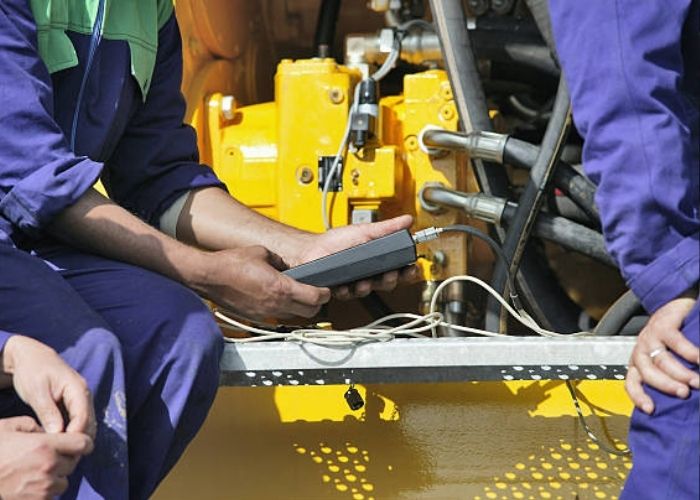
Mobile technicians use specialised equipment to:
- Test system pressure
- Identify performance issues
- Detect internal faults
This allows for quick decision-making regarding the appropriate repair solution.
Minor Cylinder Repairs
Certain cylinder issues can be addressed on-site, particularly when they involve external components.
This may include:
- Replacing seals
- Addressing minor leaks
- Inspecting rods for visible damage
However, more complex cylinder repairs may require workshop servicing.
Fitting and Component Replacement
Faulty valves, connectors and fittings can often be replaced on-site.
These repairs help restore system functionality without the need for extensive downtime.
What Requires Workshop Repair
While many hydraulic issues can be resolved on-site, some problems require specialised equipment and controlled environments.
Major Hydraulic Pump Failures
Hydraulic pumps are complex components that require precision repair.
In cases of severe wear or internal damage, pumps must be:
- Removed from the machine
- Disassembled and inspected
- Repaired or rebuilt in a workshop
Full Cylinder Rebuilds
When cylinders experience significant internal damage, such as scoring or structural failure, a full rebuild is required.
This process typically involves:
- Complete disassembly
- Machining or replacement of damaged parts
- Reassembly and testing
Contaminated Hydraulic Systems
Severe contamination requires thorough system flushing and cleaning, which is often best carried out in a workshop environment.
This ensures all contaminants are removed and the system is restored to optimal condition.
Complex System Failures
Failures involving multiple components or electrical-hydraulic integration may require detailed diagnostics that cannot be performed on-site.
In these cases, workshop repair ensures accuracy and reliability.
Temporary vs Permanent Hydraulic Fixes
In emergency situations, the goal is often to restore equipment functionality as quickly as possible.
This may involve temporary repairs that allow operations to continue until a permanent solution can be implemented.
Temporary fixes may include:
- Emergency hose replacements
- Quick seal repairs
- Pressure adjustments
While these solutions are effective in the short term, permanent repairs are necessary to ensure long-term reliability.
Balancing speed and quality is essential when managing hydraulic repairs on-site.
The Impact of Downtime on Construction Projects
Downtime has a direct impact on productivity and profitability.
When hydraulic systems fail:
- Work comes to a standstill
- Project timelines are delayed
- Labour and equipment costs increase
- Deadlines may be missed
In busy construction environments across Cape Town, these delays can have significant financial implications.
Fast and efficient hydraulic repair services help minimise these risks and keep projects moving forward.
The Role of Mobile Hydraulic Technicians
Mobile hydraulic technicians are equipped to respond quickly to breakdowns and carry out repairs on-site.
Their role includes:
- Rapid response to emergency calls
- On-site diagnostics and fault identification
- Immediate repair or temporary solutions
- Advising on further maintenance requirements
Their expertise allows them to assess whether a repair can be completed on-site or if workshop intervention is necessary.
This level of support is critical for maintaining operational efficiency on construction sites.
Onsite Hydraulic Repair Services in Cape Town
Construction projects in Cape Town often operate in demanding environments, from urban developments to large-scale infrastructure projects.
Access to reliable onsite hydraulic repair services ensures that equipment failures can be addressed quickly and effectively.
Mobile hydraulic services in Cape Town provide:
- Fast response times across the region
- Fully equipped service vehicles
- Skilled technicians with industry experience
- Support for a wide range of equipment
These services are designed to reduce downtime and keep projects on schedule.
Preventing Emergency Breakdowns Through Maintenance
While emergency repairs are sometimes unavoidable, preventative maintenance plays a key role in reducing the likelihood of breakdowns.
Best practices include:
- Regular inspection of hoses and fittings
- Monitoring hydraulic fluid condition
- Checking system pressure and performance
- Addressing minor issues before they escalate
Proactive maintenance helps identify potential problems early, reducing the need for emergency repairs.
Keeping Construction Sites Running with Reliable Hydraulic Support
Hydraulic systems are essential to the operation of earthmoving equipment on construction sites. When these systems fail, the impact on productivity can be significant.
Onsite hydraulic repair services provide a practical solution by delivering fast, effective repairs directly where they are needed.
By understanding what can be fixed on-site, when workshop repairs are required and the importance of preventative maintenance, contractors can make informed decisions that protect both equipment and project timelines.
In high-pressure construction environments such as those found across Cape Town, access to reliable mobile hydraulic support is essential for keeping operations running smoothly and efficiently.